
Measurement scope
Static/dynamic/sliding Contact Angle, Surface Tension, Surface Energy

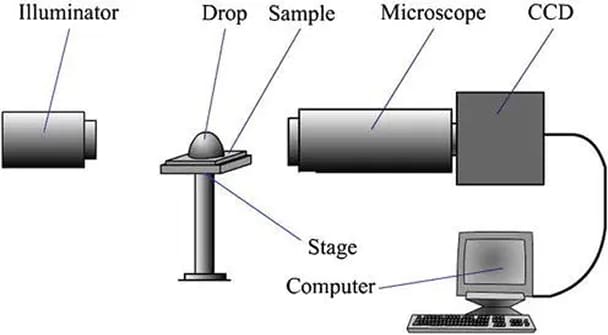
The Definitive Guide to Buying Goniometers for Contact Angle Measurement enables R&D teams, QA/QC groups and educational institutions to select suitable instruments for wettability and adhesion and surface-prep analysis while avoiding excessive costs and insufficient specifications. The guide includes information about contact-angle goniometers and contact-angle meters and drop-shape analyzers (not biomechanical joint goniometers) and presents angles in degrees and surface/interfacial tension in mN/m units.

Static/dynamic/sliding Contact Angle, Surface Tension, Surface Energy
battery, offline
tilt stage, droppers, chambers, sample holders

telecentric/HD, ADSA/Young–Laplace, batch
temperature/Humidity control modules, logs

warranty, training, updates
manual → fully automated
up to 0.01° resolution needs high-fidelity optics + fitting

calibration, software, accessories, service
routines, references, audit logs
offline operation, encrypted export
The Dyne pen provides quick threshold testing for line-side treatment but it does not offer angle measurements or tracing functions.
Static CA + pendant-drop ST; manual workflow; limited upgrades.
The system provides basic training but it only measures static contact angles and requires manual operation which results in slow processing times.
The Dropometer device operates without power connection because it runs on battery power and functions offline. It measures static and dynamic and sliding contact angles as well as SE and pendant-drop surface tension. The device has been peer-reviewed for its accuracy and users can add more features through modular upgrades. Custom fixtures available: fabric frame for textiles; clamp-on concrete holder for in-situ slabs/countertops
The Brighton SA 5001 handheld industrial device provides automated water contact angle testing for screening multiple samples but its functionality remains limited to specific applications. Price not listed by Brighton.
These benchtops offer complete functionality with automated operation and controlled environments which meet the requirements of regulated high-throughput laboratories.
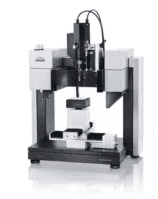
The Advanced R&D team together with regulated QA professionals require a premium benchtop like Kruss DSA100 which includes automated features and built-in audit trails and climate control systems.
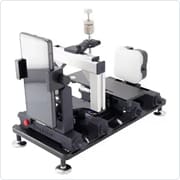
The Dropometer provides peer-reviewed capabilities in a portable offline operation and modular upgrade options.
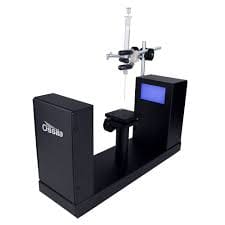
Budget lab needing static Contact Angle + Surface Tension only: Ossila (affordable bench starter).
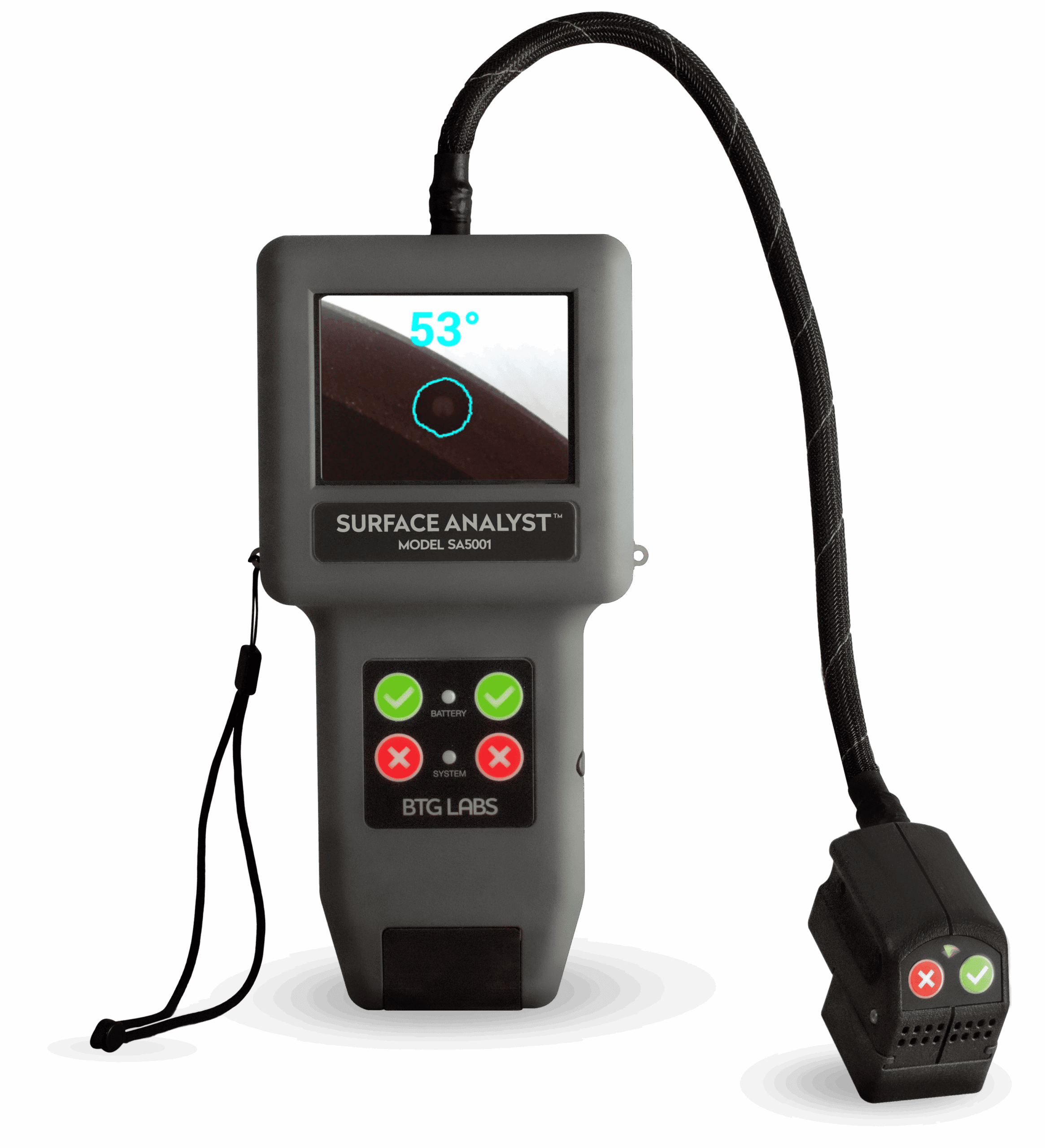
Production line screening where speed is more important than depth: Handheld units like Brighton SA 5001.
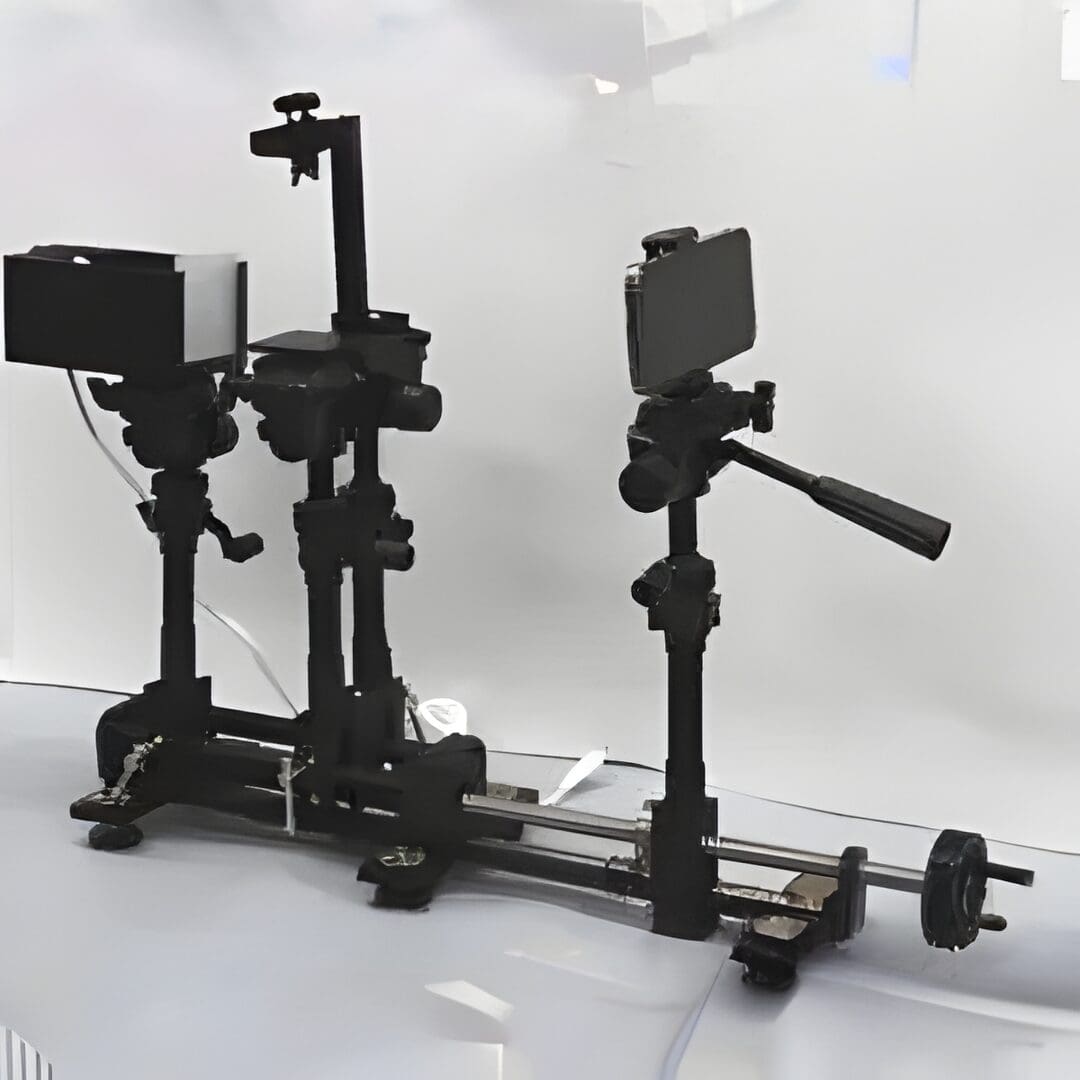
DIY version with Image J is the most cost-effective option to teach fundamentals
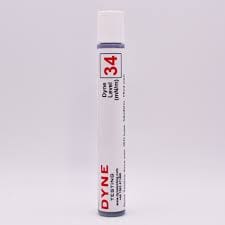
The Dyne pen provides fast qualitative treatment verification
When picking a contact angle measurement tool, consider these factors:
Best for quick, qualitative wettability checks; not for calibrated, reportable measurements.
Avoid when you need industrial QA, scientific reproducibility, or any need for traceability/broader measurements.
Dyne pens (also called corona test pens / Sherman pens) apply fluids with known surface tension. A continuous line suggests the surface energy meets or exceeds the pen value; beading/breaks suggest it is lower.
Use procedures aligned with ISO 8296 and treat this as a fast screening tool rather than a replacement for contact angle instrumentation.
Packaging, automotive, aerospace, and quick confirmation of plasma/flame treatment on polymers.
Instant, inexpensive, and simple for line-side go/no-go checks on production lines.
Very low cost; no training required
Instant visual feedback
Pocket-sized and field-ready
Qualitative only; no contact angle, surface tension or hysteresis values
Results vary with user interpretation
Hazardous fluids with limited shelf life
No stated calibration/traceability features
No digital logging/export
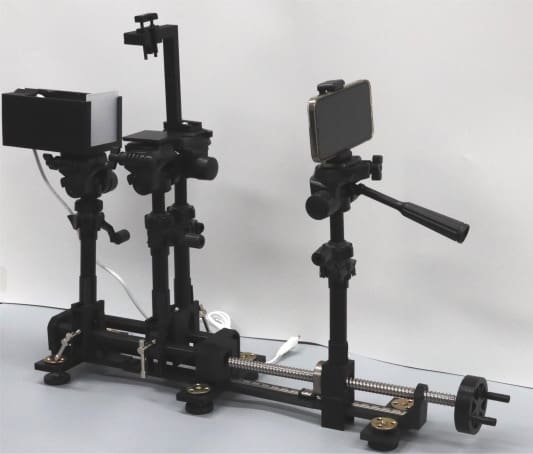
Great learning tool for static angles; not a substitute for purpose-built goniometers.
Avoid when you need industrial QA, scientific reproducibility, or any need for traceability/broader measurements.
This budget-friendly method uses a droplet (often water) on a test surface. You capture a side photo with a smartphone/camera and analyze the image in software like ImageJ using contact-angle plug-ins. Users trace the droplet profile manually to estimate the angle where the liquid meets the solid.
Published protocols can improve consistency, but operator technique and lighting still drive large variability.
Teaching, proof-of-concept work, or one-off static angles on a tight budget.
Researchers and educators teaching wetting principles, or occasional users who do not need to invest in hardware.
Extremely low cost (camera + free software)
±1° accuracy possible with care
Good for teaching and learning fundamentals
Time-consuming manual workflow; not suitable for high-volume testing
Only supports static angle without complex add-ons
Operator-dependent; strong lighting/optics sensitivity
No built-in calibration/traceability for QA/regulatory workflows
No upgrade path without custom rigs/add-ons
Accurate, affordable bench unit for static CA + pendant ST, but not built for automation, dynamic CA, or regulated environments.
Avoid when you need high-throughput, regulated QA, or advanced dynamic analysis requiring automation + traceability.
The Ossila Contact Angle Goniometer is a small, affordable benchtop tool that offers reliable surface analysis for around $3,000 USD. It includes a precision-adjustable stage, a high-resolution camera, and manual syringe/drop deposition for static contact angle work and basic pendant-drop measurements.
Static contact angle (~5–180°) and pendant-drop surface tension (model-based fit).
Academic groups, QA teams, or startups needing accurate static CA + pendant ST without automation.
Academic labs, small/medium QA teams, and startups validating polymers/thin films/plasma/coatings.
Affordable entry price (~$3,000 USD)
Accurate static Contact Angle and pendant drop measurements
Compact and semi-portable
Software supports pendant-drop fitting (Young–Laplace principle) and polynomial analysis
Manual sample handling; no automation for dosing or tilt
Limited dynamic measurement capability
Requires mains power and a laptop no battery operation
No environmental controls, calibration logs, or upgrade path
Research-grade accuracy and full Contact Angle / Surface Tension / Surface Energy in a portable, offline, upgradeable, and field-ready system; fewer built-in automation features than premium benchtops.
Designed as a portable field/lab-ready system with offline operation.
Manual prep steps still matter for consistency.
Avoid if your workflow requires a fully closed high-throughput robotic line with no operator involvement.
The DropletLab Dropometer is a smartphone-based instrument delivering a 2.2 kg portable setup with offline AI-assisted imaging for contact angle and surface energy workflows. It supports static, advancing/receding and sliding angle analysis with optional pendant-drop/surface tension support and documented calibration protocols.
It is intended for research labs, field engineering, and teams needing strong capability without high-end benchtop system cost or infrastructure.
Static, advancing, receding, sliding angle + pendant-drop surface/interfacial tension with portable/offline workflow.
When you need research-grade, traceable Contact Angle/Surface Tension /Surface Energy measurements in lab or field, with portable hardware and offline workflows.
Universities, QA teams, field engineers, and R&D groups needing broad capability without heavy infrastructure.
0.01° resolution; measures static, dynamic, and sliding angles pendant-drop Surface Tension, surface energy
Portable, battery-powered, offline operation
Peer-reviewed and benchmarked vs KRÜSS DSA100
Upgradeable design; optional modules for tilt, environment, and multi-liquid support
Lease-to-own and academic pricing available
Slightly higher price than entry-level units
Fewer built-in automation features than $20K+ benchtop systems
Sample preparation and drop placement are still manual
Requires a smartphone and initial setup
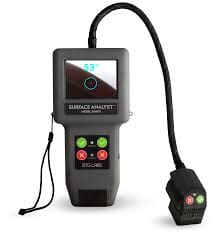
Example: Brighton Science Surface Analyst 5001
Blazing-fast, handheld pass/fail for industrial cleanliness/adhesion checks: excellent for QA lines, not for research-grade breadth or traceable science.
Avoid when you need measurements for research/education, multi-fluid studies, dynamic angles, or rigorous scientific traceability/data depth.
Handheld contact angle analyzers test surfaces quickly on production lines, often using a purified water droplet in a top-down, non-destructive workflow. At the press of a button they provide a contact-angle-related result and, in many cases, a pass/fail indicator in seconds.
They are ideal for line readiness checks, not full wetting characterization.
Static contact angle only (top-down, non-destructive). No dynamic angles, surface tension, or surface energy.
Fast pass/fail cleanliness/adhesion checks on production lines with repeatable one-button operation.
Automotive, electronics, packaging, and aerospace QA/QC teams needing fast readiness checks.
Extremely fast, one-button operation (2s test cycle)
Field-ready rugged design
Minimal training required
USB / RS-232 / Ethernet API, on-device storage ~40,000 images, trend display on device; Ideal for QA validation on the line
Scope limited: No advancing/receding, sliding angle, Surface Energy/Surface Tension
Speed over depth: simple numeric or go/no-go vs standards; limited scientific traceability/raw data
Accuracy not specified in datasheet; performance tied to calibration/consumables
Closed system; proprietary water cartridges; minimal expandability
Best for QA lines, not research/education or multi-fluid studies
Example: KRÜSS DSA100, Biolin Theta Flex, DataPhysics OCA
Gold-standard lab platforms delivering full Static, advancing, receding, sliding contact angles/ pendant-drop surface-interfacial tension/surface energy + automation + traceability: costly, non-portable, and best for advanced/regulated workflows.
Avoid when you need field use, budget-limited labs, or simple/occasional measurements where portability matters.
Traditional benchtop contact angle goniometers/tensiometers are fully featured lab systems with motorized hardware and advanced software for comprehensive surface characterization in controlled environments. They provide the best performance and traceability, but require budget, training, and lab infrastructure.
Static / advancing / receding Contact Angle, sliding/roll-off via motorized tilt, surface energy (Owens–Wendt, Fowkes, Zisman), Surface Tension/Interfacial Tension (pendant drop/rising bubble).
Use when you require maximum accuracy, automation, traceability, and module expandability for regulated/mission-critical work.
High-end research labs, industrial R&D, and regulated QA needing top accuracy, automation, and traceability.
Ultra-precise: 0.01° resolution , ST/IFT resolution 0.01 mN/m; highly repeatable under control.
Motorized XYZ, programmable multi-syringe dosing, automated tilt, batch processing.
Advanced optics & software: Telecentric/high-speed cameras, real-time curve fitting, dynamic wetting, custom reports.
Traceability: Built-in calibration routines, certified standards, full audit trails; regulatory-ready (pharma/aerospace).
Modular & scalable: Add liquid handling, temperature/humidity control, special sample holders.
Very expensive: $20k–$100k + plus training, install, service, modules.
Not portable; large lab footprint, fixed lab install, stable power + PC required.
Requires trained personnel and a dedicated setup; overkill for basic or occasional surface energy measurement needs.
| Dyne Pen | DIY + ImageJ (Student / Low Budget) | Ossila | Dropometer | Brighton SA 500 | Premium Benchtop | |
|---|---|---|---|---|---|---|
| Quick summary | Quick checks | Student / low budget | Basic academic | Portable R&D | Factory quality control | Advanced research |
| Price estimate | $20-$50/pen | $0-$100 setup | ~$3,000 | ~$5,000 | Price Unknown | $20k-$100k+ |
| Dyne Pen | DIY + ImageJ | Ossila | Dropometer | Brighton SA 5001 | Premium Benchtop | |
|---|---|---|---|---|---|---|
| Measurement scope | Surface energy only (threshold value) | Static contact angle (water) |
|
|
Static contact angle only (water) |
|
| Stated performance spec (resolution / accuracy, where published) | Qualitative only | ≈ ±1° (user dependent) | Not stated in manual |
Contact angle: 0.01° resolution; 0.35° accuracy Surface tension: 0.01 mN/m resolution; 0.03 mN/m accuracy |
Not stated in manual (water only) | 0.01° resolution; 0.1° instrument-based accuracy (example: KRÜSS DSA100E) |
| Optics & software | - |
|
|
|
|
|
| Dyne Pens | DIY + ImageJ | Ossila | Dropometer | Brighton SA 5001 | Premium Benchtop | |
|---|---|---|---|---|---|---|
| Automation | Manuelle | Manuelle | Software assisted |
Fully Automated Measurement (AI + optional modules) |
Fully Automated(One button test) |
Fully Automated(XYZ + Tilt + Dosing) |
| Data & connectivity | - |
Manual image files |
Video / image recording |
- App based storage - Batch analysis - Cloud sync |
- On device trends - Storage (40k tests) - USB / Ethernet API |
- Advanced analytics - Batch logging |
| Calibration | - | - |
Basic (Calibration sphere) |
Traceability (Built in prompts & logs) |
Internal Validation(Mini mal traceability) |
Full Compliance(Logs & Compliance) |
| Criteria | Dyne Pens | DIY + ImageJ | Ossila | Dropometer | Brighton SA 5001 | Premium Benchtop |
|---|---|---|---|---|---|---|
| Portability | Pocket-sized | Portable / Tripod | Mains Power(Small Benchtop) | Ultra-Portable(Battery-powered) | Handheld (Battery-powered) | Lab-Only(Large Footprint) |
| Build quality | Disposable markers | DIY / Ad-hoc setup | Durable academic-grade |
|
|
|
| Modularity | - | - | Limited (Manual tilt accessory) | Modular (Tilt, droplet control, holders) | Closed System | Highly modular (Dosing, tilt, climate) |
| Env. Control | - | - | - | Optional (Enclosures / Upgrade path) | - | Full Modules (Temp, Humidity, etc.) |
Each tool has its place. The key is matching the instrument to your lab's measurement needs, volume, maturity, and reporting requirements.
Match your top 3-4 criteria (e.g., automation, portability, accuracy, traceability) to the column that best satisfies them.
Use the modularity and future-proofing row if you expect to scale your measurement capabilities later.
Refer to the price row last: cost should follow function once you've aligned with your primary measurement needs.
Droplet Lab's Dropometer offers high precision and multi-parameter measurement. It's also truly portable. This makes it perfect for researchers, educators, and QA teams who need flexibility and accuracy.
Dyne Pens focus on speed, cost-effectiveness, and ease of use. They offer simple, threshold-only results. These are great for basic surface treatment checks on production lines.
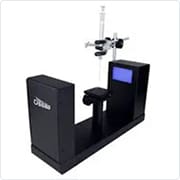
Ossila's Benchtop Goniometer offers key contact angle and surface tension features at a low price. This makes it a great option for labs on a budget that don't need automation or dynamic analysis.
Brighton Science's Surface Analyst 5001 is designed for industrial QC. It quickly and automatically checks surface cleanliness. While its scope is limited, it offers very fast, simple screening for at-line checks.
The DIY + ImageJ method is a great, low-cost option for learning or for static angle measurements. However, it has big trade-offs in repeatability, scope, and efficiency.
Premium Benchtop Systems, such as the KRÜSS DSA100, offer a broad measurement range. They also feature automation and environmental control. These features are crucial for regulated R&D settings, but they come with a much higher cost.
Making the right choice depends on aligning your specific use case with the following 11 key criteria.
What Manufacturers Don't Tell You When reading a datasheet, what isn't listed is often more important than what is.
Ask: Is the license perpetual?
Some "low-cost" benchtops require a $2,000/year service contract just to keep the software active or calibrated.
Ask: Can I use standard Luer-lock syringes?
Does the system require proprietary needles or syringes that cost 10x market rate?
Ask: Do I need to pay for any add-ons for my measurements?
Is the "Surface Energy Calculation" feature included, or is it a $1,500 software module unlock?
This section will enhance your grasp of surface wetting dynamics. It connects these concepts to buying choices and shows their real-world impacts on theory and device functions.
If you need droplet mobility for tasks like anti-icing or self-cleaning, choose tools that measure both Advancing and Receding Contact Angles. Don't settle for just static angles.
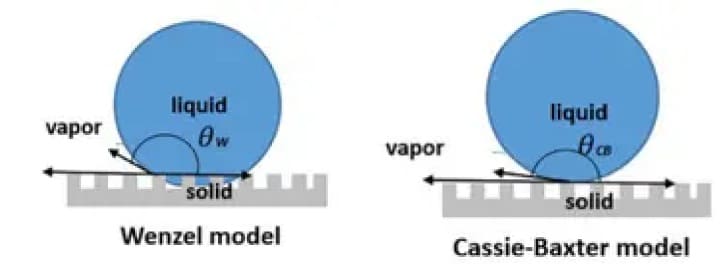
Wenzel State: Liquid fully wets surface roughness. Apparent contact angle increases with roughness for inherently hydrophobic surfaces.
Cassie-Baxter State: Air pockets form beneath the droplet. This creates superhydrophobicity (θ > 150°) with low hysteresis, similar to lotus leaves. Real surfaces can change states when pressure, tilt, or time affects them. This can impact reliability, such as their anti-icing ability.
If you are testing textured or superhydrophobic surfaces, use instruments that can track changes in wetting states like those with tilt stage modules and dynamic hysteresis analysis.
Studies show that Cassie droplets have much lower hysteresis and roll off more easily than Wenzel droplets. Droplet coalescence can jump droplets off surfaces, known as the "Lotus effect".
Wettability and hysteresis influence droplet movement in microfluidic channels. Even ±1° errors in θa or θr can severely impact function.
Hysteresis is tied to dynamic wetting in coating flows and oil extraction. Measuring θa/θr accurately helps improve solvent treatments and injection fluids.
| Theoretical Insight | Why It Matters | Key Instrument Feature |
|---|---|---|
| Dynamic Wetting & Hysteresis | Controls droplet roll-off, coating uniformity | Dosing stage, tilt module, high-speed video capture |
| Cassie vs. Wenzel Wettability | Determines superhydrophobic performance under environmental stress | Measurement range >150°, tilt & pressure testing |
| High Hysteresis Surfaces | Play a role in fluid handling or medical device applications | Low-noise imaging, automated edge detection, analytics |
| Surface Structure Influence | Enables reproducible and traceable surface testing | Modular accessories, calibration options, rugged device |
Check out Droplet Lab's 10-Step Guide to Reproducible Measurements for reliable results. Here's a quick overview for buyers looking at device support.
Clean handling of surfaces reduces contamination.
Ensures accurate drop placement.
Critical for hysteresis, surface tension, and angle correctness.
Devices should support regular calibration against references.
Temperature/humidity control is supported on scope for standalone or add-on.
Support auditability and reporting available in supported software.
The report must contain fixture identification numbers and detailed sample orientation data along with droplet coordinates, volume measurements and tilt angles. Include a setup photograph in the report to facilitate both auditing and repeatability processes.
Absolutely. Peer-reviewed validation reports 0.01% average error on synthetic drop profiles and benchmarking against Kruss DSA100 a high-end benchtop system. This meets the criteria for publication-level standards.
Yes, device specs support up to ~175°, with tilt stage to manage sliding and state transitions.
The device features multicapture feature for dynamic dosing and tilt. It accurately captures both advancing and receding angles.
Yes, it operates completely offline and meets secure lab requirements. Cloud or export features are optional.
What we compared. We compared contact angle goniometers / drop-shape analyzers used for wettability, adhesion, and surface-energy work. We did not score biomechanical/joint goniometers or general-purpose angle gauges. Scoring scale. Each instrument (or instrument category, where multiple models share the same capability class) is scored on a 1–5 scale against the same 11 criteria listed above. A score of 3 represents “meets typical requirements,” while 5 represents “best-in-class for that criterion.” Use-case weighting. The “Best by use case” rankings are weighted because different labs optimize for different outcomes. Example weighting (sums to 100%): 1. Measurement scope (static/dynamic/sliding; surface tension; surface energy): 15% 2. Optics & software (models, automation, batch workflows): 15% 3. Accuracy & repeatability (instrument + workflow): 15% 4. Calibration & traceability (logs, standards alignment): 10% 5. Automation & throughput: 10% 6. Environmental control options: 10% 7. Data handling & security (exports, multi-user, auditability): 10% 8. Modularity & upgrades: 5% 9. Build quality & support: 5% 10. Total cost of ownership (licenses, accessories, service): 3% 11. Portability & power: 2% (For other use cases—teaching labs, field testing, or production QA/QC—the weighting shifts accordingly.) Included / excluded products. We include products only when there is enough public information to score them (e.g., manufacturer datasheets, public documentation, or published validation). We exclude listings without verifiable specs, unclear product lineage, or non-comparable tools (e.g., dyne solutions without instrumentation, medical goniometers). Pricing & sources. Pricing and availability were last reviewed on Feb 1, 2026 using manufacturer pages, public documentation, and datasheets. Feature claims are sourced from manufacturer documentation unless otherwise noted. Last reviewed. This page was last reviewed on Feb 1, 2026. We update scores when manufacturers change specs/software or when new public validation becomes available. Corrections. If you see an error or a spec has changed, please submit a correction. Verified updates are typically reflected within 5 business days. Disclosure. See the disclosure statement above on this page.
The first position belongs to these systems because they deliver a complete set of audit-ready tools which include static, advancing and receding angles, sliding angle, Surface Energy and pendant-drop Surface Tension measurements, advanced optics with software, automation and environmental modules and traceable reporting for peer-reviewed and regulated research.
The second position belongs to the Dropometer because it provides research-grade measurement capabilities (static/dynamic/sliding, Surface Energy, and pendant-drop Surface Tension) combined with peer‑reviewed validation (synthetic-drop accuracy metrics), benchmarking against KRÜSS DSA100E; 0.01° stated resolution and portable offline workflows. While it provides Automatic Dropper and tilt stage it lacks the same depth of robotic automation found in premium benchtop platforms.
Ossila ranks third because it delivers a functional bench unit with static CA and pendant-drop ST and Surface Energy at an affordable price but it requires manual operation and lacks the precise peer-reviewed accuracy, traceability and automation features needed for top-level R&D.
The Dropometer achieves first place in its category because it delivers static/dynamic/sliding angle functionality together with Surface Energy, pendant-drop Surface Tension, 0.01° resolution measurement, offline logging capabilities and an upgrade path which makes it the most complete professional tool under $5K.
Ossila ranks second since it functions as a bench unit which provides static Contact Angle measurement, pendant-drop Surface Tension at a reasonable cost but it does not offer the same peer-reviewed accuracy, requires manual operation and delivers fewer automation, compliance features than the Dropometer.
DIY systems place third because it is the lowest-cost option and useful for static-angle basics, but it is slow, operator-dependent, lacks dynamic angles, traceability, and automation needed for professional use.
The Dropometer ranks first due to its fast setup time and battery power operation as well as its ability to perform CA/SFE/ST and sliding tests that give educators extensive hands-on learning opportunities in classroom and lab environments. The equipment's portability allows professors to easily move it from academic laboratories to classrooms.
DIY systems rank second because of its extremely affordable price point making them suitable for basic method instruction and fundamental teaching despite having static-angle only operation and slower usage.
DIY systems place third because it is the lowest-cost option and useful for static-angle basics, but it is slow, operator-dependent, and lacks dynamic angles, traceability, and automation needed for professional use.