
Contenu

Construction Industrie
The Practical Guide to Surface Science (2026)

D54c15105cfe94f786c500e4091d6ea65457608fde49ba183c8f862814a54249?s=100&d=m
Écrit par
Dr Amit Pratap Singh
PhD, Delhi University Post Doc - AIST Japan
Guest Author
Lire la suite
Alité
Reviewed by
Dr Alidad Amirfazli
Dr. Amirfazli, a leading expert in surface wetting and superhydrophobic coatings, has 250+ publications, edits Advances in Colloid and Interface Science, and has received multiple research awards.
Scientific Advisor & Co-founder
Lire la suite
D54c15105cfe94f786c500e4091d6ea65457608fde49ba183c8f862814a54249?s=100&d=m
Written By

Dr Amit Pratap Singh

Guest Author

PhD, Delhi University

Post Doc - AIST Japan

Alité
Évalué par

Dr Alidad Amirfazli

Scientific Advisor & Co-founder

Dr. Amirfazli, a leading expert in surface wetting and superhydrophobic coatings, has 250+ publications, edits Advances in Colloid and Interface Science, and has received multiple research awards.

This is a practical guide to Surface Science for researchers working in the Construction Industry.

Dans ce tout nouveau guide, vous apprendrez tout sur :

  • Crucial surface science principles
  • The significance of surface science measurements for the Construction industry
  • Normes et directives ASTM applicables

Plongeons dans le vif du sujet.

construction

Executive Summary

What it covers: How construction materials teams use contact angle, sliding angle and surface free energy on stone, concrete, glass, metal and coated surfaces. Each measurement is tied to a site or factory problem, a use case and a standard.
Key insights: A high water contact angle shows a surface repels water, but not whether drops roll off. Sliding angle answers that second question. On porous stone the drop soaks in, so the time of the reading matters as much as the angle.
Business value: Wetting checks catch poor surface prep before a sealant, coating or adhesive goes on, when rework is still cheap. One portable kit covers contact angle, sliding angle and surface free energy, so a materials lab can test coupons without a shared benchtop instrument.
Standards to follow: EN 828 describes wettability and surface free energy from static contact angles of probe liquids. EN 15802 describes static water contact angle on porous stone, brick and mortar. ISO 27448 describes self cleaning of photocatalytic coatings by water contact angle under UV light.
Bottom line: Use contact angle and surface free energy to check a surface before you bond, seal or coat it, and sliding angle to check water shedding after. Start with the measurement that matches your failure, then book a 15-minute consult about testing it on your own samples.

Chapitre 1 : Introduction

In construction, many durability problems start at a surface. A sealant that will not wet a dusty joint lets water in. A paint that goes onto an oily steel part peels after a season outdoors.

These are the places where wetting decides yield in construction work:

The Dropometer portable contact angle kit measures contact angle, surface and interfacial tension, surface free energy and sliding angle with one setup. Its method was validated against a KRUSS DSA100E in two peer reviewed papers. If you are new to the terms, start with wettability.

We use the following surface properties to understand the behavior of Construction products and improve their quality.

Chapitre 2 : Mesure de l’angle de contact

L’angle de contact quantifie la mouillabilité d’une surface en représentant l’angle entre la surface d’un liquide et une surface solide.
Recherche Dropletlab

Sample Image taken from Droplet Lab Tensiometer.

Young – Méthode Laplace

Méthode polynomiale

Angle de contact dynamique

Ideally, when we place a drop on a solid surface, a unique angle exists between the liquid and the solid surface. We can calculate the value of this ideal contact angle (the so-called Young’s contact angle) using Young’s equation. In practice, due to surface geometry, roughness, heterogeneity, contamination, and deformation, the contact angle value on a surface is not necessarily a single consistent value but rather falls within a range. The upper and lower limits of this range are known as the advancing and receding contact angles, respectively. The values of advancing and receding contact angles for a solid surface are highly sensitive to many parameters, such as temperature, humidity, homogeneity, and minor contamination of the surface and liquid. For example, the advancing and receding contact angles of a surface can differ at different locations.

Angle de contact dynamique par rapport à l’angle de contact statique

Les surfaces et les revêtements pratiques présentent naturellement une hystérésis d’angle de contact, indiquant une gamme de valeurs d’équilibre. Lorsque nous mesurons les angles de contact statiques, nous obtenons une seule valeur dans cette plage. S’appuyer uniquement sur des mesures statiques pose des problèmes, tels qu’une mauvaise répétabilité et une évaluation incomplète de la surface en ce qui concerne l’adhérence, la propreté, la rugosité et l’homogénéité.

In practical applications, we need to understand how easily a liquid spreads (advancing angle) and how easily it is removed (receding angle), such as in painting and cleaning. Measuring advancing and receding angles offers a holistic view of liquid-solid interaction, unlike static measurements, which yield an arbitrary value within the range.

Ces informations sont cruciales pour les surfaces du monde réel avec des variations, une rugosité et une dynamique, aidant des industries telles que les cosmétiques, la science des matériaux et la biotechnologie à concevoir des surfaces efficaces et à optimiser les processus.

Découvrez comment la mesure de l’angle de contact est effectuée sur notre tensiomètre

Pour une compréhension plus complète de la mesure de l’angle de contact, lisez notre mesure de l’angle de contact : le guide définitif

Open Benchmark Data: Contact Angle & Surface Energy

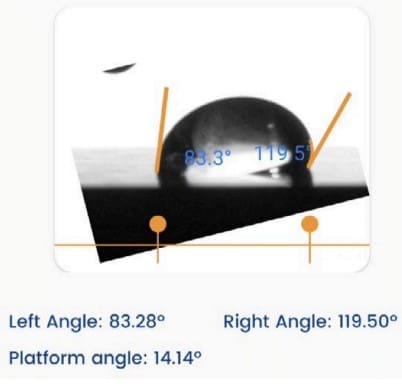
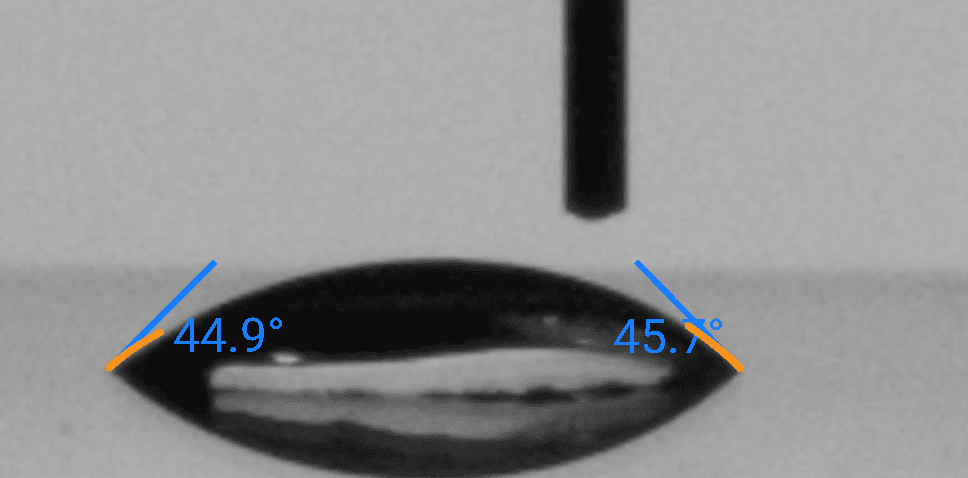
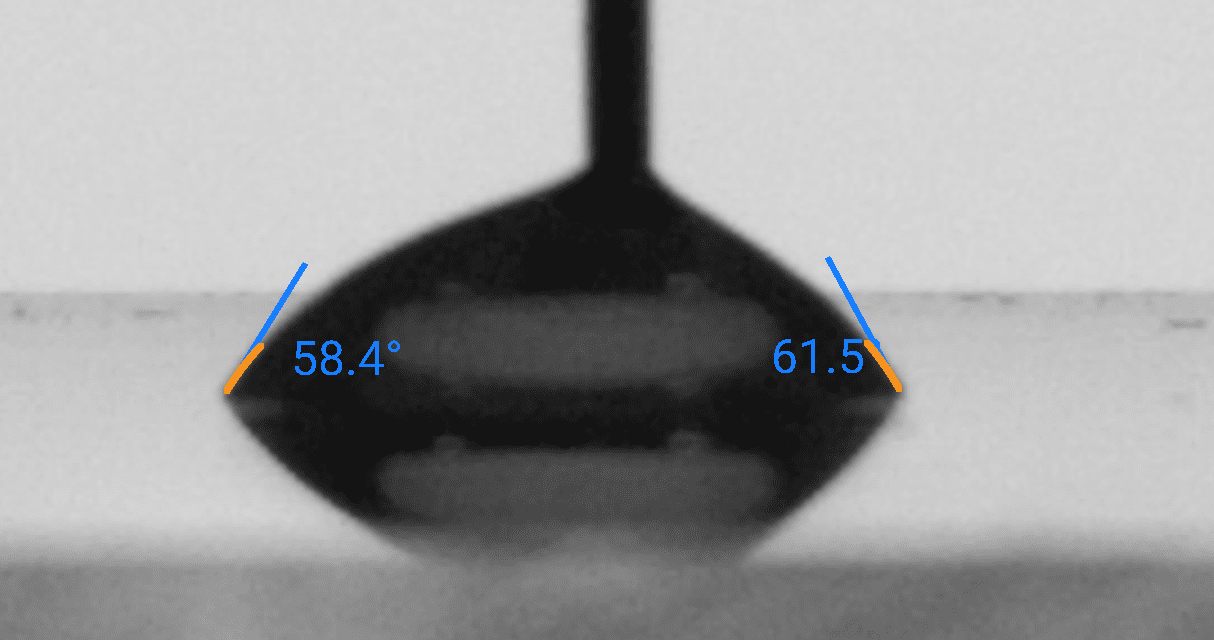
These reference measurements show how deionized water wets four standard substrates measured with the Droplet Lab Dropometer. Use them as visual and numerical benchmarks when you're checking your own sample preparation, treatments, and chemistry.

Full contact angle and surface energy datasets (including additional liquids and statistics) are available on our dataset hub.

Glass - DI Water
Glass - DI Water
Nylon - DI Water
Nylon - DI Water
PMMA - DI Water
PMMA - DI Water
Teflon - DI Water
Teflon - DI Water

The droplet images above are taken from the same benchmark series as our open dataset. For each substrate and probe liquid we report:

● Advancing and receding contact angles (and hysteresis)
● Derived surface energy (SFE) values based on multi-liquid measurements
● Measurement conditions, uncertainties, and sample preparation details

Comparing your own droplet shapes and angles against these references is a fast way to spot contamination, treatment drift, or unexpected changes in wettability.

Chapitre 3 : Mesure de la tension superficielle

Cette propriété mesure la force qui agit à la surface d’un liquide, dans le but de minimiser sa surface.

Mesure de la tension superficielle

Sample Image taken from Droplet Lab Tensiometer

Tension superficielle dynamique

La tension superficielle dynamique diffère de la tension superficielle statique, qui fait référence à l’énergie de surface par unité de surface (ou à la force agissant par unité de longueur le long du bord d’une surface liquide).

La tension superficielle statique caractérise l’état d’équilibre de l’interface liquide, tandis que la tension superficielle dynamique tient compte de la cinétique des changements à l’interface. Ces changements peuvent impliquer la présence de tensioactifs, d’additifs ou de variations de température, de pression et de composition à l’interface.

Quand utiliser la mesure dynamique de la tension superficielle

Dynamic surface tension is essential for processes that involve rapid changes at the liquid-gas or liquid-liquid interface, such as droplet and bubble formation, coalescence (change in surface area), the behavior of foams, and the drying of paints (change in composition, e.g., evaporation of solvent). It is measured by analyzing the shape of a hanging droplet over time.

La tension superficielle dynamique s’applique à diverses industries, notamment les cosmétiques, les revêtements, les produits pharmaceutiques, la peinture, l’alimentation et les boissons, ainsi que les processus industriels, où la compréhension et le contrôle du comportement des interfaces liquides sont essentiels pour la qualité du produit et l’efficacité des processus.

Apprenez comment la mesure de la tension superficielle est effectuée sur notre tensiomètre

Pour une compréhension plus complète de la mesure de l’énergie de surface, lisez notre mesure de la tension superficielle : le guide définitif

Chapitre 4 : Mesure de l’énergie de surface

L’énergie de surface fait référence à l’énergie nécessaire pour créer une unité de surface d’une nouvelle surface.
231

Sample Image taken from Droplet Lab Tensiometer

Découvrez comment la mesure de l’énergie de surface est effectuée sur notre tensiomètre

Pour une compréhension plus complète de la mesure de l’énergie de surface, lisez notre mesure de l’énergie de surface : le guide définitif

For benchmark contact angle and surface energy values on glass, nylon, PMMA, and Teflon, see the Open Benchmark Data panel above or visit our Dataset Hub for full CSV downloads.

Chapitre 5 : Mesure de l’angle de glissement

L’angle de glissement mesure l’angle auquel un film liquide glisse sur une surface solide. Il est couramment utilisé pour évaluer la résistance au glissement d’une surface.

Angle de glissement 1

Sample Image taken from Droplet Lab Tensiometer

Apprenez comment la mesure de l’angle de glissement est effectuée sur notre tensiomètre

Pour une compréhension plus complète de la mesure de l’angle de glissement, lisez notre Mesure de l’angle de glissement : le guide définitif

Chapitre 6 : Applications dans le monde réel

Within the Construction industry, several case studies exemplify the advantages of conducting surface property measurements.

Self cleaning coatings on rooftop solar panels

Dust and grime on solar panels cut output, and a self cleaning coating only helps while it keeps working. Superhydrophobic coatings aim for a high contact angle and a low sliding angle. Photocatalytic coatings aim for an angle near zero.

ISO 27448 describes self cleaning tests for photocatalytic coatings using water contact angle under UV light. The Dropometer reads the angle but has no UV lamp. Our anti soiling use case sets out the test plan, and glass cleaning verification shows how to check that glass is clean before coating.

Self cleaning coatings on rooftop solar panels

Water repellent treatments for concrete and masonry

Water that gets into concrete, stone or mortar causes leaks and frost damage. Water repellent treatments are compared by the static water contact angle they give, read at a set time after the drop lands.

EN 15802 describes this test for porous stone, brick, mortar and plaster. Untreated stone often absorbs the drop or reads below 10 degrees, which is below the Dropometer range, so record those drops as below range. A high angle does not show treatment depth, so pair it with an absorption test.

Water repellent treatments for concrete and masonry

Slip resistance and water shedding on walkway surfaces

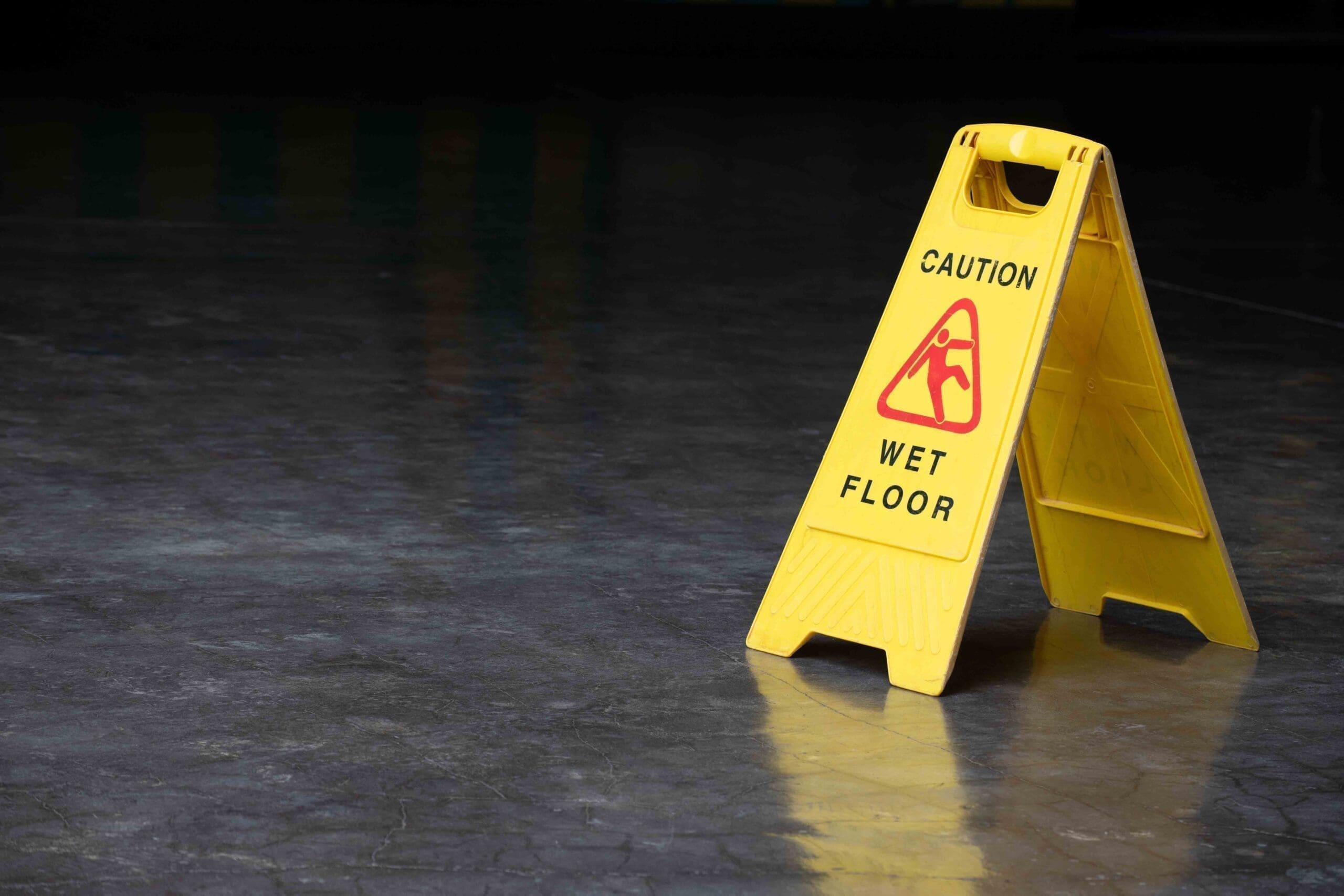
Wet walkways become slippery when water sits on them in a film. Hydrophobic tiles and coatings aim to make water bead up and run off. Contact angle shows how strongly the surface repels water, and sliding angle shows whether drops move.

Contact angle does not measure slip resistance, so keep your slip test as the acceptance test. Use wetting readings to compare treatments and to see when a coating wears. Our hydrophobic coating verification page explains how to tell a worn coating from a dirty one.
Slip resistance and water shedding on walkway surfaces

Bonding steel to concrete and other materials

Bonded steel and concrete joints depend on surface prep on both sides. Surface free energy, worked out from contact angles of two or more probe liquids, shows whether each surface is ready to bond.

EN 828 describes how to get wettability and surface free energy from static contact angles. Work out surface free energy with our surface energy calculator. The adhesive failure use case explains how to set limits from parts that bonded well.
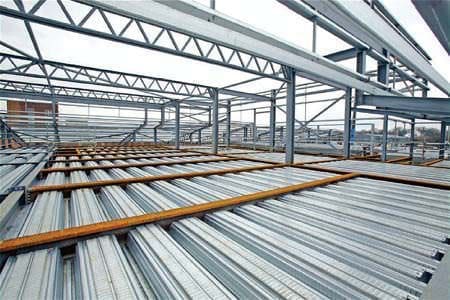
Bonding steel to concrete and other materials

Paint adhesion on metal components

Paint peels from metal when oil, residue or oxide stays on the surface after pretreatment. Water contact angle after cleaning, or after plasma treatment, shows whether the surface is ready to coat.

Craters and fisheyes in wet paint often come from silicone or oil on the part. Our pages on peeling and adhesion failures et fisheyes, craters and crawling show how to set a gate from your own panels. Confirm adhesion after cure with a tape or pull off test.

Paint adhesion on metal components

Nous sommes vos partenaires dans la résolution de votre activité et de votre Défis

Si vous êtes intéressé par la mise en œuvre de ces applications ou de toute autre application, veuillez nous contacter.

Chapitre 7 : Normes et lignes directrices

In an industry where precision reigns supreme, how can Construction manufacturers ensure their products withstand scrutiny? The answer lies in standards and guidelines: the compass that guides them through the complex maze of quality and performance.

EN 828:2013, Adhesives, Wettability by Contact Angle (Surface Free Energy of Solid Surfaces)

What it is

European standard method to determine a solid surface’s wettability and surface free energy (or critical surface tension) by measuring static contact angles of one or more probe liquids on a plane test surface. The resulting metrics support predictions of adhesive wet-out and help characterize surfaces before pretreatment, coating, or bonding.

When to use it

Ready-to-bond screening (before bond-strength testing):

Use contact angle + surface free energy to quickly flag low-wet-out substrates (metals, plastics, glass, coated parts) before you spend time on full lap-shear/peel trials.

Pretreatment/cleaning process control & troubleshooting:

Use repeatable, multi-liquid measurements to detect contamination, treatment drift (plasma/corona/flame/primer), and surface aging/recovery that can drive adhesion failures.

In-scope / Out-of-scope

In scope
  • Static sessile-drop contact angle measurements on plane test pieces/coupons with statistical interpretation across replicates.
  • Multi-liquid surface free energy determination using a documented model and known liquid properties (commonly ≥3 and up to 8 probe liquids).
  • Uniformity/heterogeneity assessment via spot-to-spot and drop-to-drop variability (useful for contamination streaks or non-uniform activation).
  • QC-style execution on contact-angle goniometers with suitable measurement range and SFE modeling software (e.g., Dropometer-style workflows that support common SFE models such as Equation-of-State, Fowkes, and Oss-Good).
Out of scope
  • Direct bond strength / durability testing (lap shear, peel, wedge, fatigue, environmental aging), these require separate mechanical test standards.
  • Universal pass/fail criteria for “good bonding”, EN 828 provides the method, not a single acceptance threshold that applies to all adhesive systems.
  • Dynamic wetting methods (advancing/receding angles, hysteresis) unless you apply other standards specifically covering dynamic angles.
  • Identifying surface chemistry/roughness root cause directly (e.g., spectroscopy, profilometry), EN 828 reports wettability outcomes, not chemical composition.

Minimum you must report (checklist)

  • Substrate description: material, finish (and roughness class if known), coating/primer details, and any surface-treatment method used.
  • Time history: time from cleaning/pretreatment to measurement (and time to bonding if this is a release gate).
  • Probe liquids: identity and count of liquids used, plus the liquid property values used in the SFE calculation.
  • Measurement method: sessile-drop static geometry, droplet volume, and the fixed timestamp used to record θ.
  • Replication plan: number of drops per liquid and the number/locations of measurement spots (map/grid).
  • Contact angle results per liquid: median θ plus a spread metric (IQR or SD), including the number of valid drops used.
  • Data-quality/exclusions: your rule for rejecting droplets (e.g., poor edge/baseline fit, non-axisymmetric drops, obvious contamination) and how many were rejected.
  • Surface free energy result: total SFE (and component terms if used), the specific model used, and the instrument/software version used to compute it.

Note: EN 828 tells you how to measure and calculate wettability/SFE, but it does not define universal “good bonding” thresholds, your limits must be calibrated to your adhesive + substrate + pretreatment and validated against bond tests. Roughness and chemical non-uniformity can bias static angles, so consistent surface prep, replication, and drop-quality QC are essential.

How to interpret results (guardrails)

  • Lower θ at the fixed timepoint generally means better wetting by that probe liquid, but interpret results primarily relative to your validated “golden” reference surface and your internal control limits.
  • High scatter is a first-class signal: large drop-to-drop or spot-to-spot spread often indicates contamination, non-uniform activation, or heterogeneity, don’t average it away; investigate and map it.
  • SFE is best used as a controlled comparative metric: it’s reliable for trending (before/after treatment, lot-to-lot control) only when the liquid set and model are locked in your SOP.
  • Do not treat θ or SFE as a direct bond-strength guarantee: confirm with representative bond tests and track failure mode (adhesive vs cohesive vs interfacial) to set/maintain Green/Yellow/Red release gates.

Maintenant, c’est à votre tour

We hope this guide showed you how to apply surface science in the Construction industry.

Maintenant, nous aimerions vous céder la parole : 

Feel free to leave a comment below—we’d love to hear from you.

Frequently asked questions

Which surface measurement should a construction materials lab start with?

Start with the failure you need to stop. Use water contact angle to check a surface before you bond, seal or paint it. Add surface free energy when you compare primers or treatments. Use sliding angle for water repellent and self cleaning coatings. Our contact angle guide et sliding angle guide explain each method.

Which standards cover contact angle for building materials?

EN 828 describes wettability and surface free energy from static contact angles before bonding. EN 15802 covers static water contact angle on porous stone, brick and mortar. ISO 27448 covers self cleaning photocatalytic coatings. The Dropometer uses the sessile drop method these standards describe. Buy the current edition before you write a procedure.

Can I measure contact angle on porous stone or concrete?

Yes, on treated surfaces. On porous materials the drop soaks in, so the angle falls over time. Read it at a fixed time and report that time with the result. Untreated stone may absorb the drop or read below 10 degrees, which is below the Dropometer range. Our EN 15802 page explains how to handle those drops.

Can I test a whole panel, beam or window on site?

The Dropometer is portable but it is not a handheld probe. It works on a bench, on a fixture at the part, or in a custom build. For very large or fixed surfaces, test witness coupons treated alongside the part, or cut sections. Our large parts use case explains the options and the limits, such as vertical surfaces that cannot hold a drop.

Does a high contact angle mean a surface will self clean?

Not on its own. A high contact angle shows a surface repels water, but drops can still stick. Sliding angle shows whether drops roll off and carry dirt with them. Photocatalytic coatings work the other way, with an angle near zero so water spreads as a film. See roll off and sliding angle and our anti soiling page.

How accurate is the Dropometer?

The drop shape method was validated against a KRUSS DSA100E in two peer reviewed papers, one in Review of Scientific Instruments and one in Colloids and Surfaces A. Published contact angle accuracy is 0.35 degrees. Automatic edge and baseline detection gives the same reading from the same image. See our validation papers.

Does Droplet Lab work with glass and quartz makers?

Yes. The US R&D site of a global fused silica and quartz maker added pendant drop surface tension, contact angle and surface energy with one Dropometer, at a site that had none of the three before. For cleaning checks on glass surfaces, see our glass cleaning verification use case. Browse all case studies.

Standards, evidence and resources

1. Industry standards Use cases Case studies Client citations (our analysis of each paper) Example scenario: comparing water repellent treatments on limestone. A building materials research group applies several water repellent treatments to limestone and brick samples and reads static water contact angle with the Dropometer at a fixed time after each drop lands. The group repeats the readings after weathering cycles and pairs them with water absorption tests, since contact angle alone does not show how deep a treatment goes. Use case collections Further resources